Peggy English

The Pseudonym Girl

 
The Jazz Age
Home
Peggy English
Jane Green
Marion Harris
Scrappy Lambert
Keller Sisters
Ray Mayer & Edith Evans
Misc 1920’s
New 1920’s
1920’s Sheet Music
1930’s Vocalists
Bee Palmer
Finding Bee Palmer
Pathé Rooster
Paul Specht AHO
Frances Sper
Aileen Stanley
Esther Walker
Margaret Young
Annette Hanshaw
Biography
Recordings
Sheet Music
Photos
Maxwell House Ads
Links
Brox Sisters
Photos
Recordings
Sheet Music
Movies
Bobbe Brox Obit
Cliff Edwards
Biography
Recordings
Movies
Books
Instruments
Sheet Music
Photos
Miscellaneous
Links
Ruth Etting
Recordings
Sheet Music
Movies
Photos
Jazz Age Links
1920s Peppy Pops
Sylvester Ahola
Ben Bernie
Boswell Sisters
Boswell Sisters 2
Broadway Bellhops
California Ramblers
Cotton Pickers
Bernie Cummins
Bing Crosby
Dime Store Dance
Edison Needle Cut
Cliff Edwards
Five Birmingham Babies
Lou Gold
Benny Goodman
Annette Hanshaw
Abe Lyman
Roger Wolfe Kahn
Hal Kemp
Little Ramblers
Ray Miller
Irving Mills
Miff Mole
Red Nichols
Red Nichols 2
Original Sound 20s
Ben Pollack
Harry Reser
Fred Rich
Adrian Rollini
Adrian Rollini 2
Fred Waring
Margaret Young
Other Jazz
Banjos
Dixieland Jazz
Search
Search This Site


Peggy English

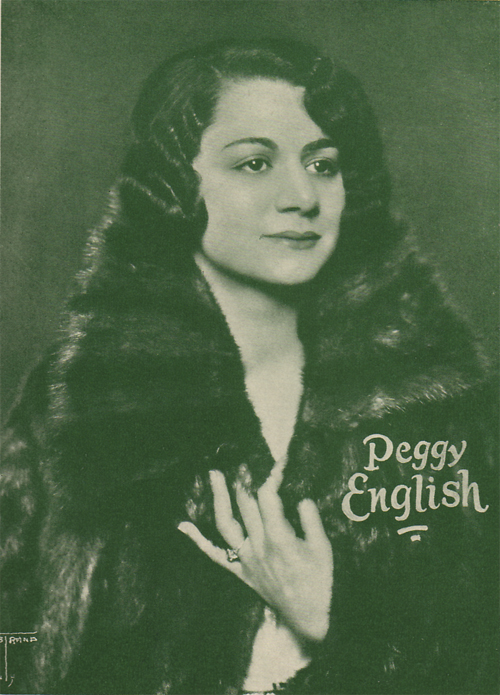
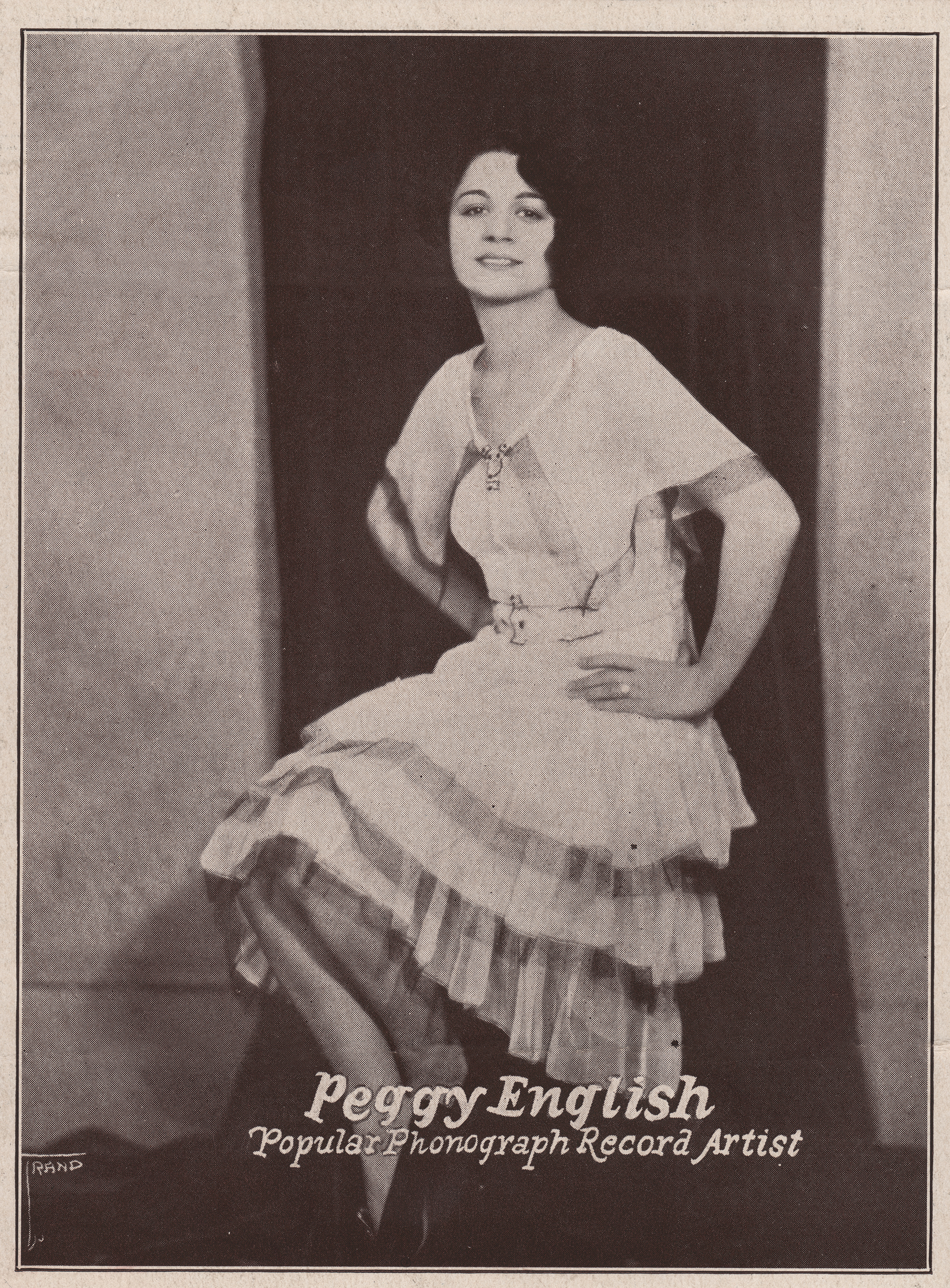
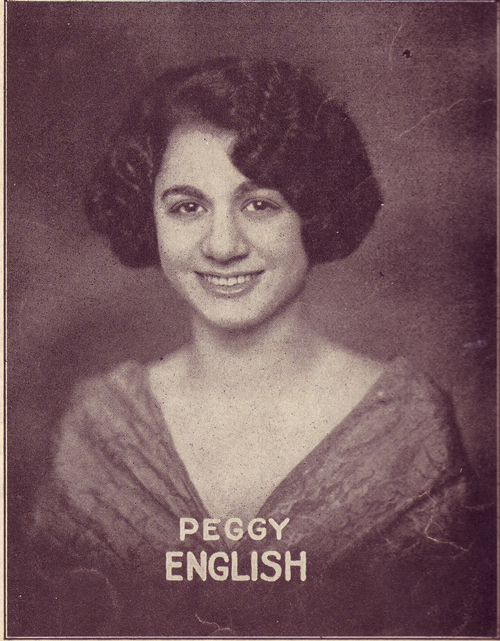
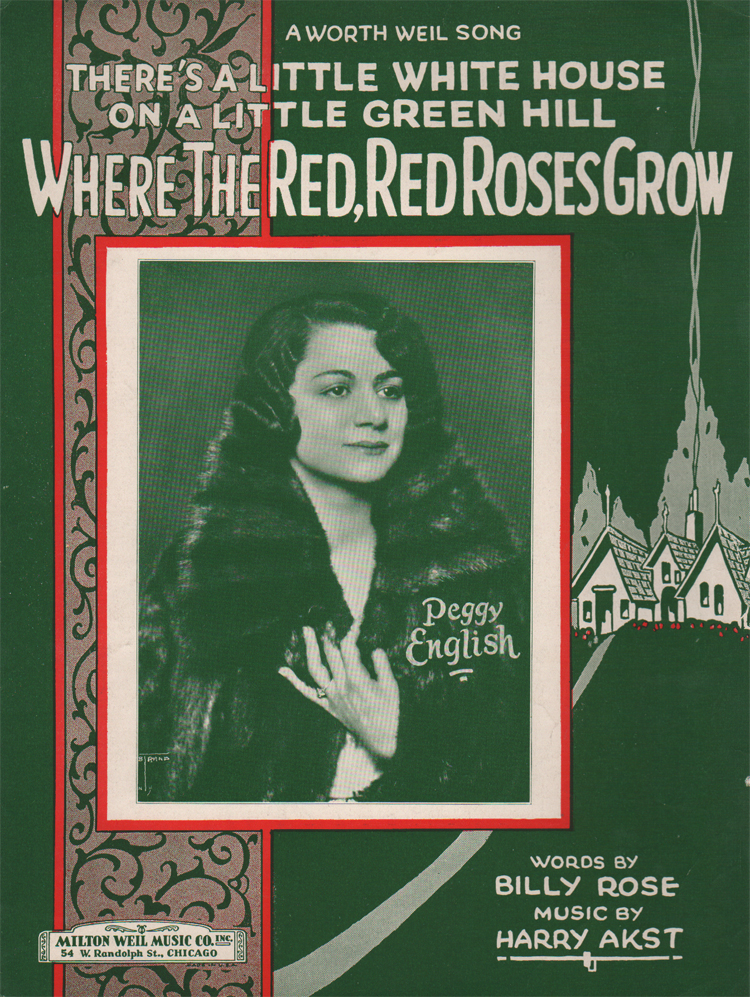
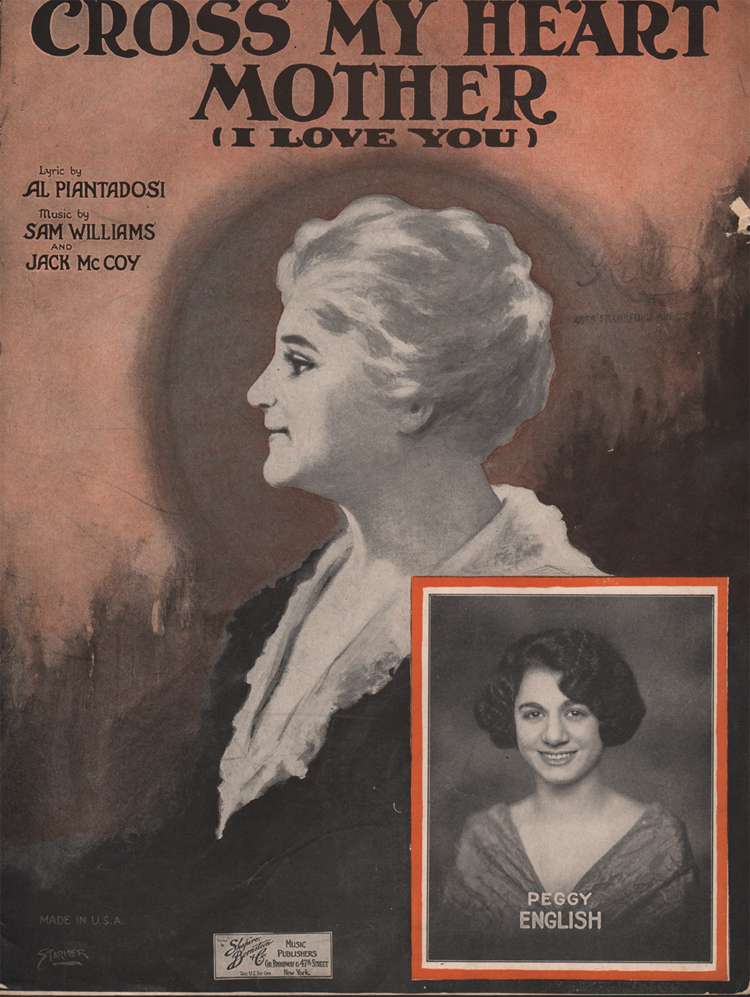
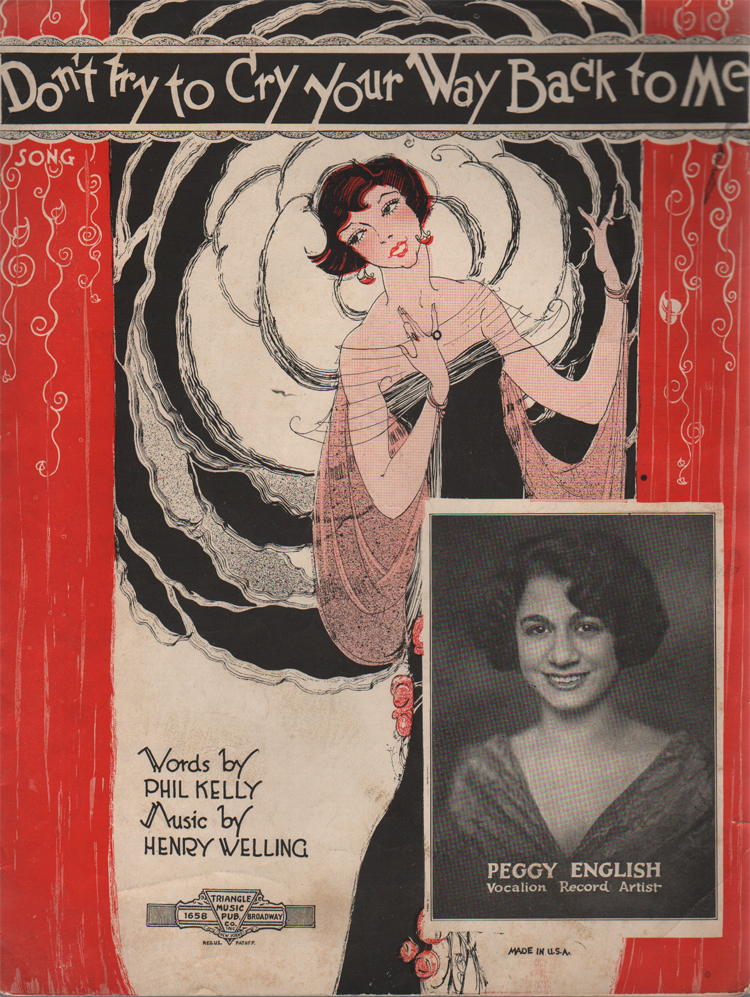
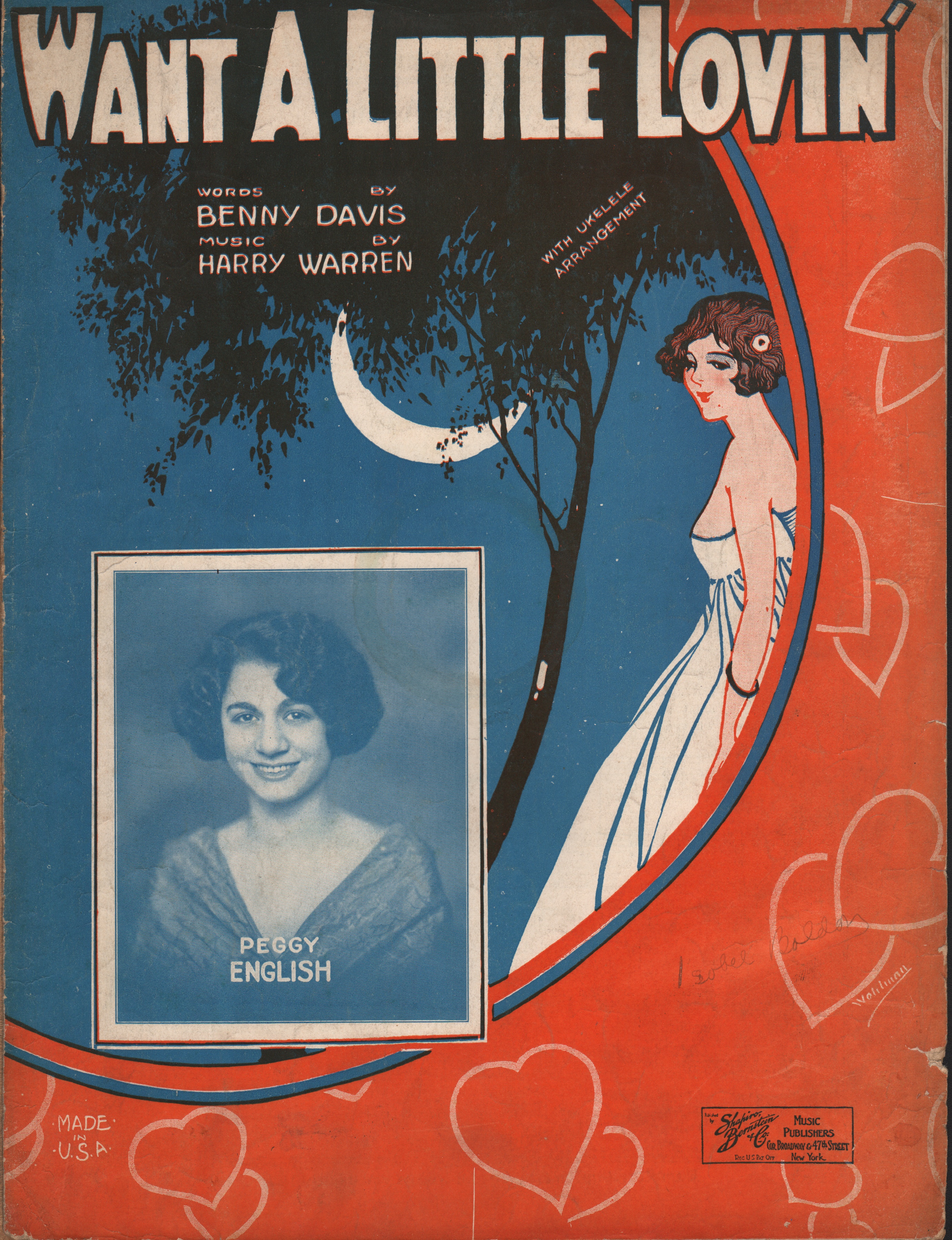
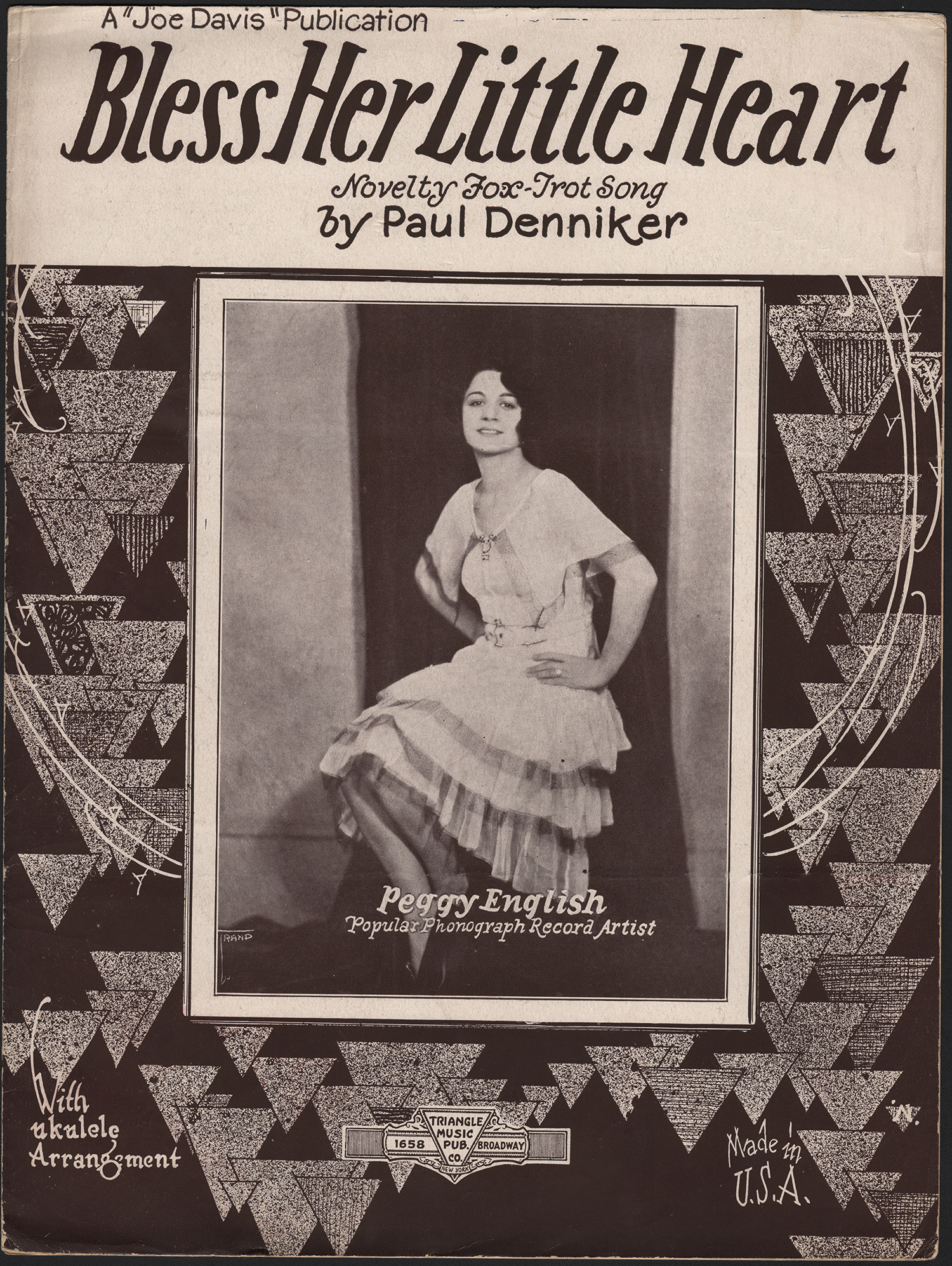
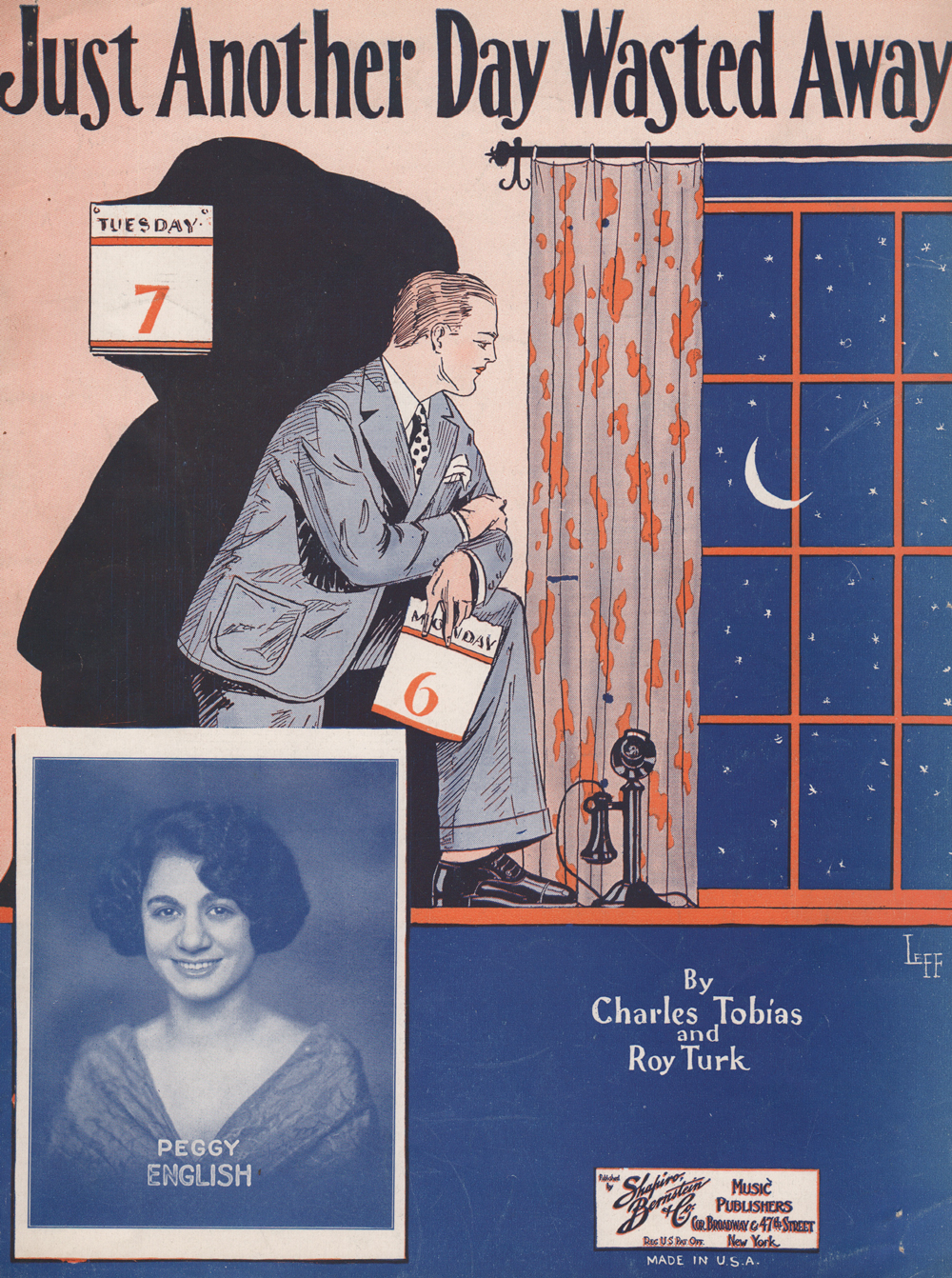
Peggy English is one of the lesser known female vocalists of the Jazz Age. Her vocal style might be characterized as a cross between two other Jazz Age vocalists, Jane Green and Marion Harris. I affectionately call her the "Pseudonym Girl" because Peggy English recorded under at least 13 different names across many record labels during her short 1920’s recording career. Peggy English recorded from 1925 to 1928, and then appears to try a comeback on a lone 1933 recording date as "Harlem Hannah" on the Bluebird record label. Her entire recording output consisted of 99 sides for the Vocalion, Banner, Cameo, Brunswick, Victor, Harmony, and Bluebird labels. Her piano accompanists included Rube Bloom and Bill Wirges.

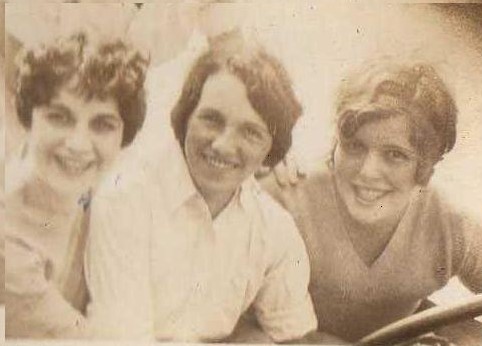
Peggy English, Frances Sper, unknown girl - Camp Copake, NY (1928)
Peggy English, Frances Sper, unknown girl
Camp Copake, NY (1928)

There has been some speculation amongst record collectors that 1920’s Jazz Age singer Frances Sper was really Peggy English. This notion is dispelled by the above photo which shows Frances Sper and Peggy English side by side. It turns out that Ms Sper and Ms English were actually pals who worked as part of the entertainment in the Summer of 1928 at Camp Copake just 100 miles north of New York City on the New York-Massachusetts state border. Frances Sper Horn (1896-1951) was married to Jack L. Horn and is the mother of the famous jazz musician Paul Horn. Frances Sper was an in-house pianist for Irving Berlin and had her own weekly radio show in New York on WNYC (as well as other radio stations) from 1926-1928.

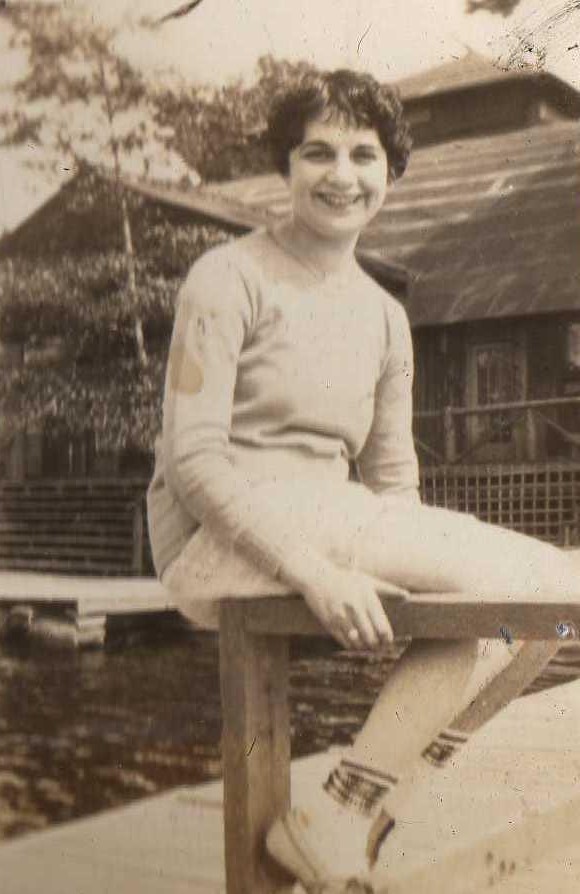
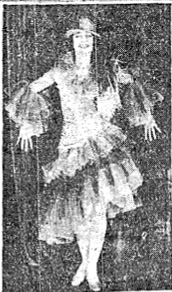
Peggy English - Camp Copake, NY (1928)
Peggy English
Camp Copake, NY (1928)

Peggy English’s Tours
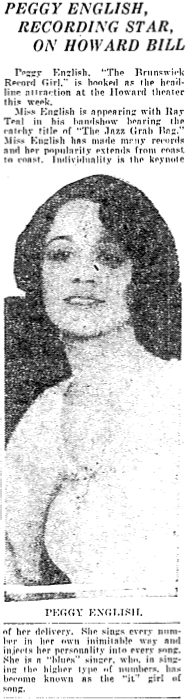
During the period 1927-1928 Peggy English, now promoted as "The Brunswick Girl", toured on the Publix Theatre circuit. In November of 1927 Peggy appeared at the Tivoli Theatre in Chicago with Frankie Masters and His Band in "Jazz á la Carte". In March 1928, we find Peggy featured in the "Jazz Grab Bag" stage production with the Ray Teal Orchestra and appearing in such cities as San Antonio, Atlanta, and Washington, DC on the Publix tour. Band leader Ray Teal (1902-1976) fronted his orchestra up through the mid-1930’s but went on to become better known as a character actor in Western films. His most famous role was from 1960-1972 as the plain-speaking Sheriff Roy Coffee in the hit television series Bonanza.

Peggy English in Jazz a la Carte (1928)
Peggy English
Touring in "Jazz Grab Bag"
With Ray Teal Orchestra (February, 1928)

In June 1930 Peggy English appears at the Palace Theatre in Washington, DC. By July 1931 Peggy’s star billing has been diminished to second billing as she performs at a Utica, New York theatre. In October Peggy appears as a "blues singer" on WABC Radio with Max Smolen’s Orchestra.

Peggy English returns to the recording studio one final time on April 6, 1933 for a one-day recording session as "Harlem Hannah ad Her Hot Boys" and "Hannah’s Hot Shots". Out of that session came "Easy Rider" and "My Handy Man" which appeared on the Bluebird label.

No information can be found on Peggy’s whereabouts until February 1934 when she could be seen with Johnny Johnson’s Orchestra at the New Kenmore Rainbow Room in Albany, New York. Beyond this 1934 newspaper reference no further information on the life of Peggy English can be found by this researcher.

Peggy English’s Recording Pseudonyms
Listed below is a complete list of Peggy English’s pseudonyms used by the various record labels she recorded for in the Jazz Age. But this was a common practice during this era as a recording artist bound by contract to one of the major labels would be relegated to a pseudonym on their cheaper subsidiary labels sold in the department stores across the country such as Sears, Montgomery Ward, W. T. Grant, and the like.

  • Lillie Daltry
  • Nora West
  • Mae French
  • Dolly Prince
  • Peggy Britton
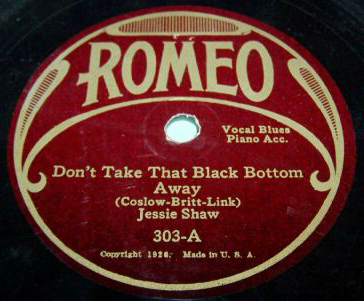
  • Jessie Shaw
  • Sally Brown
  • Winnie Smith
  • Marjorie Adams
  • Harlem Hannah & Her Hot Boys
  • Hannah’s Hot Shots

Note that most of the pseudonyms had a British influence about them. This makes me wonder if Peggy English was yet another pseudonym for the singer. Is it possible that Peggy was born in England or of second-generation English immigrants and whose whole recording and stage career names were a creation of her imagination or a record executive’s whimsical fancy? Further research or a clue from a possible relative will determine the truth sooner or later. Email me if you know the answer.

Peggy English and Jane Gray
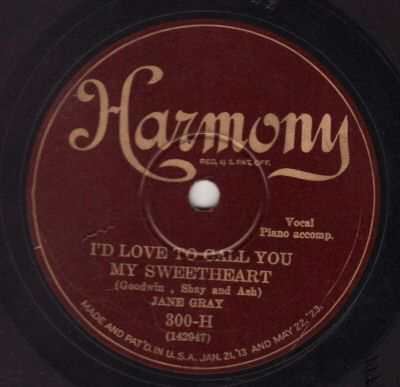
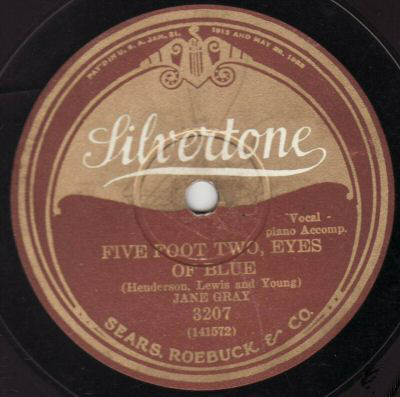
Peggy English had yet another recording alter-identity. She recorded under the name of Jane Gray exclusively on the Harmony and Velvet Tone labels. The Jane Gray recording era ran from 1926 to 1928 where Jane and Peggy alternated record releases throughout that time period. Peggy English would record as Peggy in a New York studio one day and then as Jane Gray in the next day’s session. Peggy’s releases were usually on the Vocalion label while Jane’s were all issued on Columbia Record’s Harmony and Velvet Tone, Harmony’s sister label. In 1928 Peggy appears as Jane Gray with the University Six on Harmony 591-H.

The Jane Gray identity appears to be another British-influence pseudonym derived from Lady Jane Grey (1536-1554) of English royalty, although the preferred spelling is Lady Jane Grey, not Gray. Lady Jane Grey is popularly known as "The Nine Days Queen".

I’d Love To Call You Sweetheart - Harmony 300-H
Harmony 300-H

Don’t Take That Black Bottom Away - Romeo 303-A
Romeo 303-A

Five Foot Two, Eyes Of Blue - Silvertone 3207
Silvertone 3207


Editor’s Note
If anyone reading this has facts on Peggy English’s life, career, and later years, please do not hesitate to email me. Note that Peggy English was not the Peggy English of Tennessee born in 1907 as cited by some sources.

Acknowledgement
Special thanks to Frances Sper granddaughter-in-law Robin Horn for supplying details of Frances Sper and the 1928 Frances Sper and Peggy English photos.

Listen to
Peggy English on Rich Conaty's "Big Broadcast"
Rich Conaty's
"Big Broadcast"

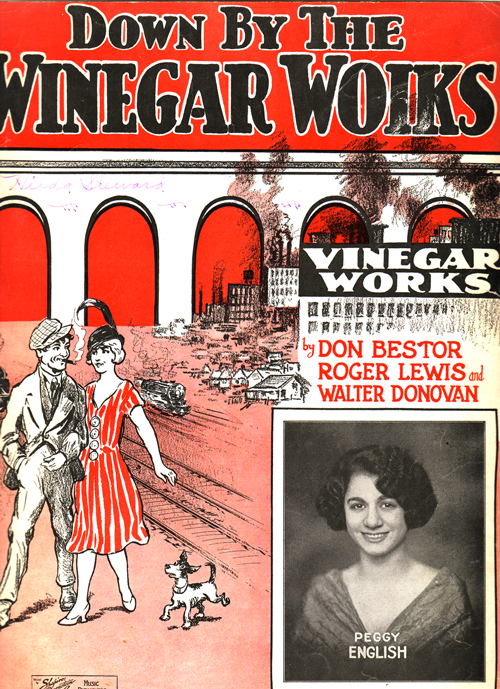
Down By The Winegar Woiks - 1925
1925

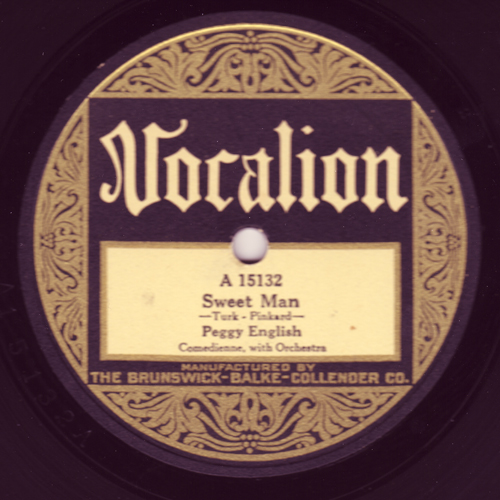
Sweet Man - Vocalion 15132
Vocalion 15132

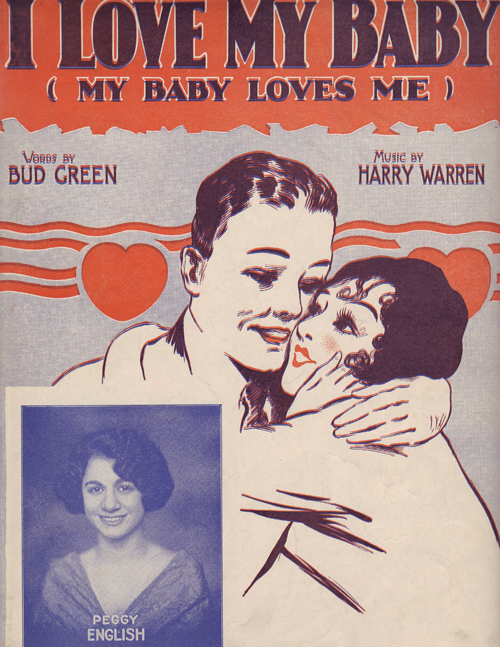
I Love My Baby (My Baby Loves Me) - 1925
1925

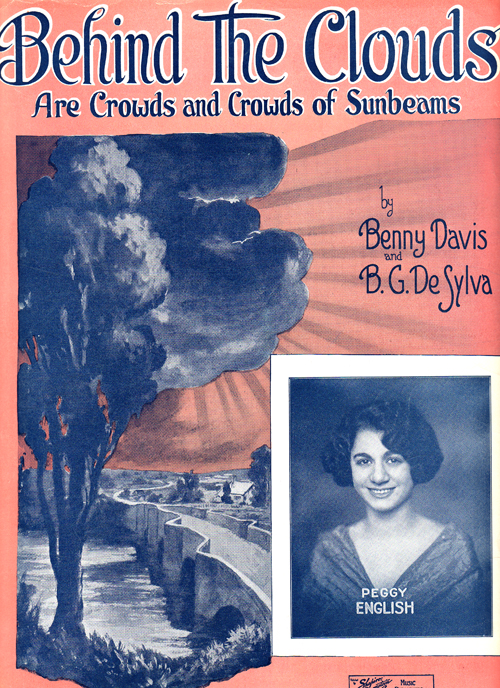
Behind The Clouds - 1926
1926

Atlanta Appearance- April 8, 1928
Atlanta, Georgia
Appearance (1928)


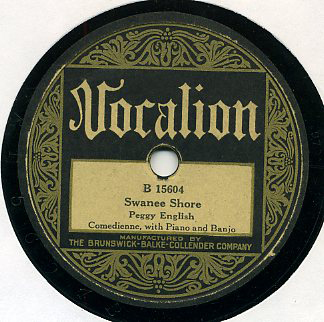
Swanee Shore - Vocalion B15604
Vocalion 15604

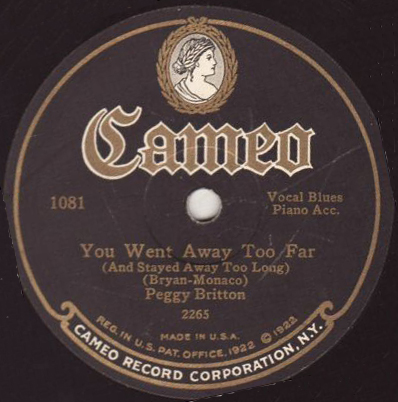
You Went Away Too Far - Cameo 1081
Cameo 1081

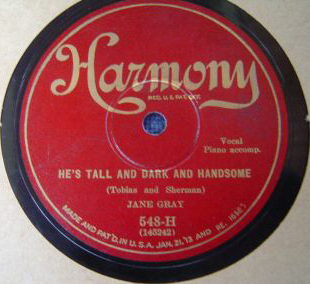
He’s Tall and Dark and Handsome - Harmony 548-H
Harmony 548

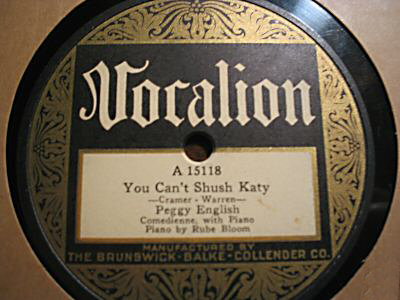
You Can’t Shush Katy - Vocalion A15118
Vocalion 15118

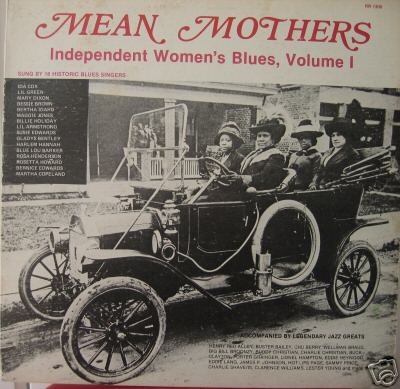
Mean Mothers LP Peggy English as "Harlem Hannah"
"Mean Mothers" LP
with Harlem Hannah